Chicago, Illinois
UI/UX design for Chicago software and operations teams.
We are a UI/UX design agency with one office, in Surat, India, and we work with Chicago companies remotely. Most of what we design is enterprise software: portals, dashboards and internal tools where the same screen is used by hundreds of people, every working day.
Remote, and clear about it
One office in India, clients in Chicago.
The software work in Chicago is not mostly startups. It is insurance, banking and trading, freight and logistics, healthcare administration, manufacturing and the internal systems that hold those industries together. Software of that kind has long-lived screens: a claims portal, a dispatch console, a trading blotter, a policy admin tool. Each one is used all day by people who did not choose it and cannot avoid it, which raises the bar rather than lowering it. The people using those screens are often experienced operators who have built workarounds around the current interface, and those workarounds are the most useful research we can get. We design screens of that kind, and we design them to survive years of added fields, changed rules and new reporting requirements.
What we are not, said plainly: there is no Chicago office, no local designers and nobody to send to a meeting in the Loop. We are a studio of about eight people working from one address in Surat, with roughly a decade of practice behind us. Everything we do for you happens over scheduled calls and written documents. We have run engagements that lasted most of a year, so this is a working method rather than a compromise we settled for. For a team already used to managing a vendor across time zones, that is an ordinary arrangement. For a team that wants a designer in the room, it is not, and we would rather say so at the start than at the end.
Chicago is on Central time and we are on IST, so the overlap sits late in our day: your working morning, our evening. We do not quote exact hours, because daylight saving moves the offset by an hour twice a year and the number changes with it. What we do instead is agree fixed call slots inside the overlap, keep review notes and decisions in writing, and make sure the person who needs to read something can find it without waiting for us to wake up the next morning.
What Chicago teams ask for
Four things we design most often here.
Enterprise portals
Claims, policy, order and case management screens where the workflow is long, the fields are many and the roles are strict.
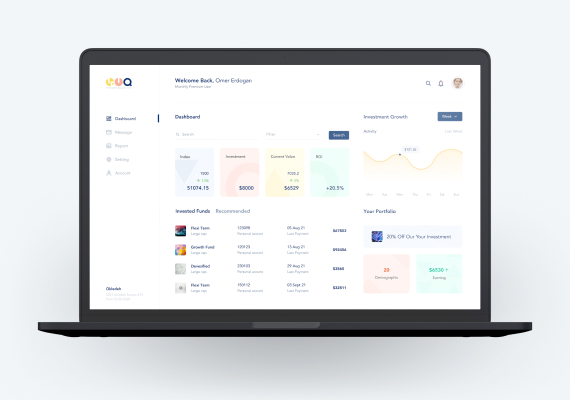
Operations and logistics dashboards
Dispatch, tracking and exception views designed around the one number an operator watches all day long, and the exceptions that interrupt it.
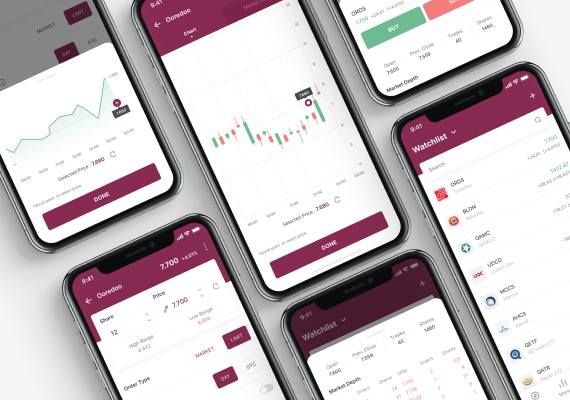
Financial services interfaces
Trading, portfolio and reporting screens where a misread figure carries a real cost with it.
Design systems for large teams
Components, tokens and rules that keep a hundred screens consistent when several teams are building them at once.
How it runs
How an engagement is structured.
Discovery before design
Two weeks reading the workflows, the rules and the system you already have. We do not redesign a process we have not watched run, because the exception cases are usually where the real work lives.
Accessibility treated as a requirement
Contrast, focus order, target sizes and labels checked as we design, not bolted on after an audit raises them.
Handover built for engineers
Specs, states, edge cases and component behaviour documented well enough that a build team can implement without guessing at the intent behind a screen.
The same designer throughout
You get one named person on every call. No account layer, and no passing your project to someone you have never met.
Context
What Chicago companies usually bring us.
A Chicago company looking for a UI/UX design agency usually arrives with a specific problem rather than a green field: a portal that has grown confusing after five years of additions, a dashboard nobody trusts, a system being migrated while it is still in daily use. Redesigning inside a live system is a different discipline from designing a new one. You cannot stop the business in order to fix the interface, so the work has to move in stages, with each stage shippable and each one leaving the product no worse than it found it.
The industries here shape the constraints. Financial services work needs dense tables, exact figures, audit trails and states that account for every exception. Logistics work needs an operator view that answers one question quickly: where is this, and what has gone wrong with it. Insurance and healthcare work needs long forms broken into defensible steps and screens that will satisfy a reviewer. None of that is decorative, and all of it benefits from being designed by someone who has seen the pattern before and knows which parts of it are fixed.
Enterprise projects also involve more people than startup projects do. There are product owners, engineering leads, compliance reviewers and sometimes a design system that already exists and must be followed. We are comfortable with that rhythm, and with working inside your system rather than beside it. The honest limit is the one we started with: we are not in Chicago, so the relationship runs on scheduled calls and written work. If that fits how your organisation already operates, the distance costs remarkably little.
Price and pace are worth saying out loud as well. Large organisations move on procurement calendars, and we plan around that rather than against it: a scoping call, a written proposal, a purchase order, then the work. Once we start, the cadence is ours to keep, and we keep it in small pieces that can be reviewed by the people who need to see them. If your review cycle is monthly, we will say up front that it will slow the design down, and we will plan the stages around the dates you actually have rather than the dates everyone wishes they had.
Questions
Questions Chicago teams ask us.
Where are you based?
In one place: 617, Laxmi Enclave 2, Katargam, Surat, India. There is no Chicago office and no local team. The work is done remotely, on an agreed call schedule, and we are the only studio working under this name.
Have you worked on enterprise software before?
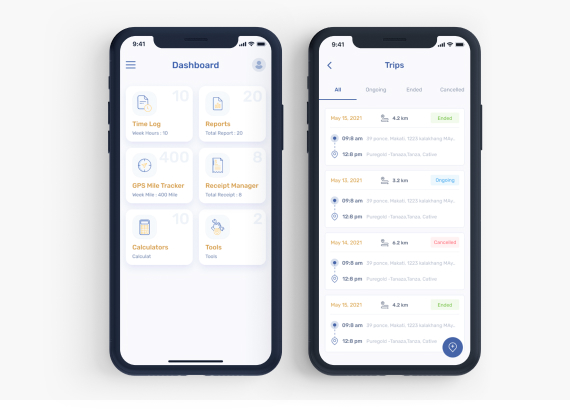
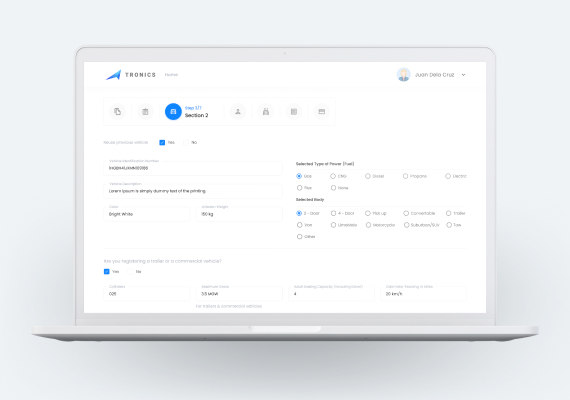
Yes. Our portfolio includes an audit management dashboard, a disk manager web app, a vehicle registration system and two financial products. All were built for teams rather than consumers, which is the harder case to design for, and none of them were for a company in Illinois.
Can you work alongside an in-house design team?
Yes, and it often works better that way. We take a workstream or a product area, follow your existing design system where there is one, and hand back files your team can maintain after we leave.
How do you handle the time difference from Chicago?
Chicago is on Central time and we are on IST, so the overlap sits in our evening. We book fixed slots inside that window and keep the rest of the week in writing. Daylight saving shifts the offset, so we agree slots rather than hours, and we do not quote a clock time that will be wrong in a few months.
What do you need from us to start?
Access to the current product, a walkthrough of the workflow and the names of the people who will review the work. Most projects begin with the free 15-point UX audit, and we reply within one working day.
Get a free 15-point UX audit of your product.
Send us the link. Within one working day you get what to fix first, and why.
Contact
Start a project
Tell us what you are building. We reply within one working day.
- +91-8866301464
- info@ixdesign.in
- Mon–Fri 9:00–18:00 · Sat 9:00–13:00