UI/UX design for Toronto teams
A UI/UX design agency for Toronto product teams.
IXdesign is a small studio in Surat, India, and we have exactly one office — it is not in Canada. From that room we run a UI/UX design agency for Toronto teams, working on the hours where our two days overlap.
Remote, and honest about it
What hiring a Surat studio actually means.
Toronto has no shortage of design agencies, and nearly all of them are closer to you than we are. We are not going to argue otherwise. Companies work with us for the reason most remote clients do: a small team that stays on the project from the first flow to the handoff, rather than a rotating cast of juniors once the contract is signed. About eight people, about a decade of practice, and no intention of growing into an agency where you never meet the person doing the work.
The real difference is distance, and we design around it rather than pretending it away. Everything happens in Figma, in a shared file you can open the day the project starts and which never goes dark. Written updates land while you sleep, so your morning begins with progress instead of a question. Where a live conversation genuinely matters — a kick-off, a hard review, a decision with a budget attached — we keep a fixed slot that suits Eastern time.
We are not going to put a Canadian address on this page, and you should be suspicious of any studio that does. IXdesign has one office: 617, Laxmi Enclave 2, near Gajera School, Katargam, Surat. If you are looking for a UI/UX design agency, Toronto or anywhere else, the useful question is not where the studio sits. It is whether the people who pitched the work will be the people who do it, and whether they will still be there when the second release needs designing.
The way a project usually starts is small. You send a link to the product you have now and ask for the free 15-point UX audit. Within one working day you get a ranked list of what is costing you sign-ups or support tickets, and why. Some clients fix the list themselves and never hire us. Others ask us to design the whole product. Both are reasonable outcomes, and neither one starts with a pitch deck.
What Toronto teams bring us
Four briefs we see most often.
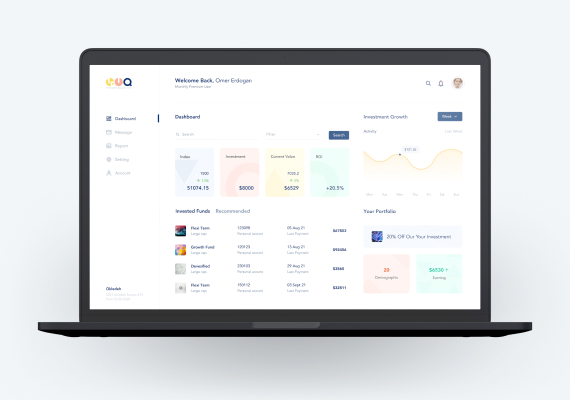
Financial and insurance interfaces
Dashboards, statements, claims and self-service screens for financial services and insurance, where a number has to be right and has to look right at the same time. Regulated screens rarely reward cleverness; they reward clarity and consistency.
Healthcare and clinic software
Booking, patient records and clinical dashboards designed for someone at the end of a long shift, not for a product demo. Fewer clicks and larger targets matter more here than anywhere else we work.
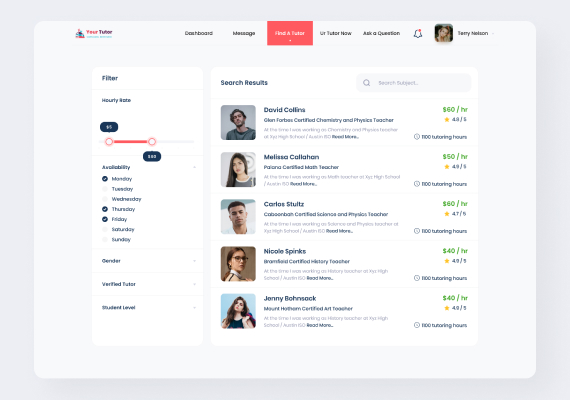
Education platforms
Learning products and the sites in front of them, for students, tutors and parents who each need something different from the same account. Three audiences, one system, and roles designed in from the start.
SaaS that outgrew its interface
A product built fast and now carrying too many screens, filters and states. We redraw the core flows and the states around them, then document what your engineers should keep.
How it runs
What the time difference costs, and what it does not.
One fixed call, every week
A 9am call in Toronto lands in our evening, and we plan the week around it. The slot stays where it is, so reviews are booked rather than improvised and nobody is chasing a calendar at the last minute.
Written by default
Briefs, feedback and sign-off live in the shared file and in a written log, dated. Nobody has to reconstruct a decision from memory six weeks later, and a new engineer can read the history.
A file, never a screenshot
Flows, wireframes and components are in Figma from day one, with spacing, states and notes your developers can inspect rather than guess at. Handoff is a link, not a folder of images.
An answer within one working day
Every question gets a reply inside one working day, and we say the same thing to clients in every timezone. If something is genuinely urgent, tell us and we will find a slot that same day.
Context
Why a Toronto brief is a particular kind of brief.
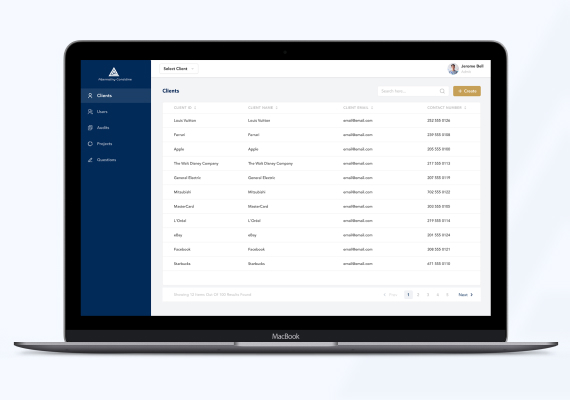
Toronto is a company town in a real sense. Financial services, insurance, healthcare and education dominate the work here, and almost all of it is now software. A bank, an insurer, a hospital network and a large university end up with the same problem: a product suite that grew one release at a time, with a different interface behind every door and nobody who owns how it all fits together.
That history shows up on screen. One dashboard for a portfolio, another for claims, a third for the same customer record, each with its own idea of what a date looks like. Users keep three logins and a spreadsheet to hold the whole picture. Designing the screens is half the job. The other half is deciding what the system should feel like as one product, and that is a conversation about information architecture before it is a conversation about colour.
Hiring rules add their own constraint. If your users include regulated staff, you have accessibility and audit requirements to meet, and legal and compliance will want to read the flows before anything is built. We are not experts in Canadian regulation and we will not claim to be. We design so that your compliance team can follow a flow and sign it off, and your engineers can build it without a second round of translation.
The good news is that much of this is fixable work. Most of the value in a Toronto redesign comes from consolidation — one navigation, one set of components, one pattern for a table or a filter — rather than from a new visual style. That is unglamorous, it is what we are good at, and it survives a change of leadership, which a rebrand often does not.
Questions
Working with a Surat studio, from Toronto.
Do you have an office in Toronto?
No. IXdesign has one office, at 617, Laxmi Enclave 2, near Gajera School, Katargam, Surat, India. We work with Toronto companies remotely, and we will not pretend to have a local team, a local address or staff in the city. Anyone who tells you otherwise should be asked for their street address.
How do calls work across the time difference?
Toronto is nine and a half to ten and a half hours behind us, depending on the season, since Canada moves its clocks and India does not. A morning call there lands in our evening. We keep one fixed weekly window so meetings are planned rather than improvised, and everything else runs in writing.
Can you work alongside our in-house designers?
Yes. Some clients want a whole product designed, others want senior help on a single flow or a design system. We take the brief either way, and we will tell you plainly if we think you need less than you asked for, which happens more often than you would expect.
What does the free 15-point UX audit cover?
Send a link to your live product. Within one working day you get a 15-point UX audit: a ranked list of what is costing you sign-ups or support tickets, and why, with no obligation to continue. There is no charge, and you do not have to be a client to ask for one.
Do you also build the product?
We design, and we build websites on our own code-first WordPress theme. Product engineering is handed to your developers, or to a development partner you choose. We do not pretend to be an app development shop.
Get a free 15-point UX audit of your product.
Send us the link. Within one working day you get what to fix first, and why.
Contact
Start a project
Tell us what you are building. We reply within one working day.
- +91-8866301464
- info@ixdesign.in
- Mon–Fri 9:00–18:00 · Sat 9:00–13:00