UI/UX design for Vancouver teams
Product design for Vancouver software and media teams.
We run a UI/UX design agency for Vancouver teams from a single studio in Surat, India. There is no office here and no local staff — just a small team, roughly a decade of practice, and a working method built around the hours Pacific time leaves us.
Remote by design
A Surat studio with a working week that reaches Vancouver.
Most Vancouver teams find us the way anyone finds a remote UI/UX design agency: a search, then a look through the portfolio. The first question is almost always the same: how does this work with a gap this wide? The answer is unglamorous. We design in Figma, we write decisions down, and we hold one call slot near the end of our day, because that is the only honest place where the overlap exists.
Pacific time sits further from India than Eastern does, and we would rather say that plainly than imply a normal working day. A mid-morning call in Vancouver lands late in our evening, sometimes after our office has closed. What we can promise is one slot each week that we keep deliberately clear, and everything else handled in writing while you are asleep and we are awake.
One office, in Surat, and no claim to anything else. If a design studio tells you it has a Vancouver branch, ask for the street address and go and look at it. Ours is public, and so is the work: twelve projects across seven industries, every one of them designed from this room, for teams on your side of the world and ours.
The first step is small, and it is free. Send a link to the product you have now and ask for the 15-point UX audit. Within one working day you get the fixes that would matter most, ranked, with the reasoning for each. Some teams act on the list themselves. Others ask us to design the next release. Neither path needs a discovery workshop before it can begin.
What Vancouver teams ask for
Four briefs that come up most.
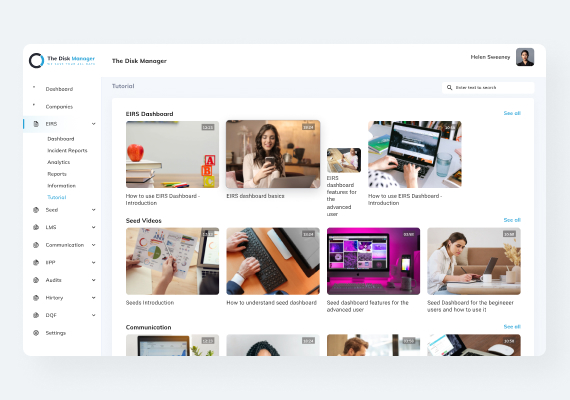
SaaS products and dashboards
The core product: onboarding, the main working screen, settings, billing and the empty states that decide whether a trial survives its first week. Most of our SaaS work is one long screen done properly.
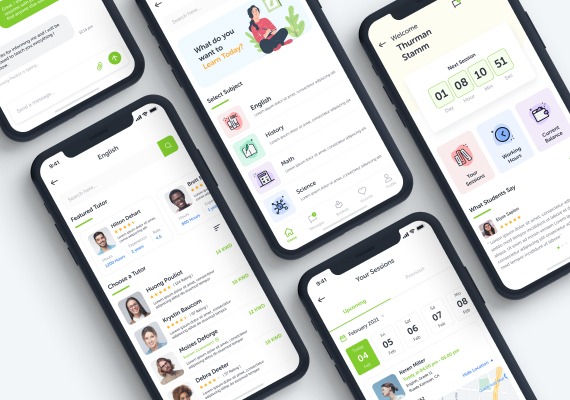
Digital media and content platforms
Reading, watching and publishing interfaces where the content leads and the interface stays quiet. Structure and pace matter more here than decoration, and a brand has to survive on a small phone.
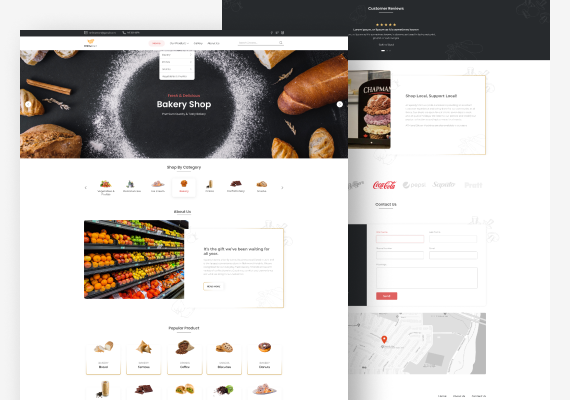
Websites that have to convert
A site with one clear promise and one clear next step on every page, and a form a buyer will actually finish rather than abandon halfway. We design the after-click screens too.
Design systems and cleanup
A product three teams have styled differently, consolidated into components, type and rules your engineers can hold without asking. The saving shows up in every release after it.
How it runs
The shape of a project across ten time zones.
One slot at the end of our day
We set a single weekly meeting that lands in your morning and our evening, and we keep it clear. Nobody is asked to be flexible at ten at night, and the slot does not move because of our convenience.
Async first, in writing
Feedback and sign-off live in Figma comments and a dated log, so nothing depends on somebody recalling a call six weeks later. You can catch up over coffee in five minutes.
A prototype before pixels
You click through the flow before anything is styled. Changing a wireframe costs an afternoon; changing a finished screen costs a week, so we spend the cheap hours first.
Handoff engineers can inspect
Components, spacing and every state documented in the file. We will walk your engineers through the first screen and stay for the questions, however basic they sound.
Context
Vancouver is not one industry, and the work shows it.
The city is more mixed than its reputation suggests. Software is the obvious centre — SaaS companies, developer tools, and the smaller studios that serve them — but a large part of the work here is media: games, streaming, publishing, and the agencies that build campaigns and content products around all three.
That range changes what a brief looks like. A SaaS team cares about the working screen, the empty state and the pricing page. A media team cares about reading, watching and sharing, and how a brand holds together on a small phone. We have designed both, often with the same handful of people, which is one reason we take fewer projects at a time than a larger agency would.
The talent market matters too. Vancouver draws product people the way few Canadian cities do, so your in-house team may already be strong and simply short of design capacity. Much of our work is not a full redesign but a bounded piece: a flows review, a design system, a second pair of eyes before launch. We are comfortable being one part of a team we did not build.
We will not claim to know your market better than you do. What we bring is a method, a decade of applying it, and the honesty to say when the answer is smaller than the problem you described. If that sounds like less than a large agency promises, it is also less than a large agency charges.
Questions
Working with a Surat studio, from Vancouver.
Where are you actually based?
Surat, in Gujarat, India. One office, at 617, Laxmi Enclave 2, near Gajera School, Katargam. We have no office and no staff in Vancouver, and we do not run a local team in the city. Every project in our portfolio was designed from that one room.
How does Pacific time work in practice?
Vancouver is twelve and a half to thirteen and a half hours behind us, depending on the season, so a mid-morning call there is late evening here. The honest overlap is your early morning and our evening. We keep one fixed slot and run everything else in writing, which suits most product teams better than it sounds.
Can you join a product team that is already in Vancouver?
That is the usual arrangement. We come in as design capacity, take a defined slice of the work, and hand back files your team owns. No long onboarding, and no insistence that you change a process that already works for you.
Do you design games?
We design interfaces, not games. If part of your media product is a player, a dashboard or a publishing tool, that is our work. Game art and engine work are not, and we will say so rather than take a brief we would do badly.
What do we get from the free audit?
Send a link to your product. Within one working day you get a 15-point UX audit: the fixes that would matter most, ranked, with the reasoning for each. There is no charge, and no obligation to go further. Plenty of teams stop at the list.
Get a free 15-point UX audit of your product.
Send us the link. Within one working day you get what to fix first, and why.
Contact
Start a project
Tell us what you are building. We reply within one working day.
- +91-8866301464
- info@ixdesign.in
- Mon–Fri 9:00–18:00 · Sat 9:00–13:00