Remote product design for the Bay Area
UI/UX design agency for San Francisco teams.
We design SaaS products, dashboards and the sites that sell them for teams across the Bay Area, from one studio in Surat, India. California sits at the very end of our day, so the overlap is real but late, and we plan around that instead of pretending it is easy.
How we work with the Bay Area
Surat to San Francisco: a small overlap, used well.
We are one studio, in Surat, in western India. We do not have an office in San Francisco or anywhere in the Bay Area, and we do not dress up a remote engagement as a local one. What we offer is a decade of practice, a team of about eight, and an honest account of what time zones do to a project.
Pacific time sits at the very end of our working day. A late morning call in San Francisco lands in our evening, after our usual hours, so we treat those calls as the exception and schedule them deliberately rather than assuming we can always be there. Most weeks one or two live calls carry the work; everything else moves asynchronously.
Asynchronous is where a remote engagement earns its keep. You write feedback in Figma or record a short walkthrough before you leave; we pick it up in your evening, work through it overnight, and leave the next round of screens ready before your next day starts. Small, frequent rounds beat one long review every fortnight.
The measures we watch are simple: how many rounds a screen takes to settle, how long a question waits for an answer, and whether the work is still understood a month after handover. None of those depend on a shared postcode. They depend on clear briefs, visible progress and decisions that are written down as they happen.
Design could happen from anywhere, and we are clear that ours happens from Surat. If your team needs a partner in the room for workshops every week, that is a genuine reason to choose a local studio, and we will tell you so. If your team already works across several time zones, ours will not be the hardest one you deal with.
What Bay Area teams need
Four things we design for first.
Design systems that hold
Tokens, components and clear rules your engineers can build from, so the tenth screen looks as considered as the first and the system survives the next three features.
Onboarding and activation
The first fifteen minutes of a SaaS product often decide the next fifteen months. We design that path in detail, including the empty and errored states a new account meets.
Data-dense dashboards
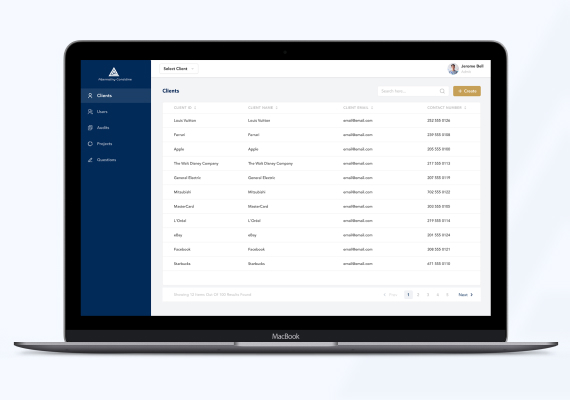
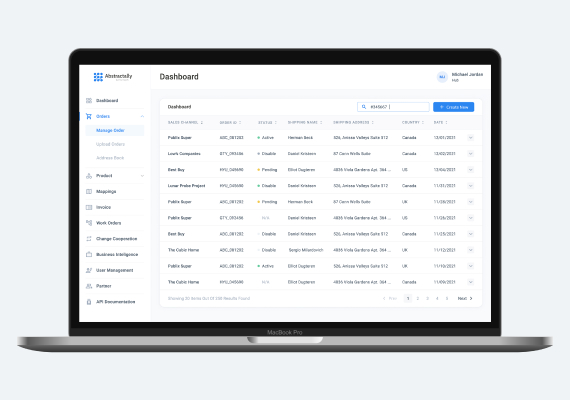
Analytics, admin and reporting views where the whole job is to make a large amount of state readable at a glance, without clutter or a chart nobody asked for.
Product and marketing together
The app, the pricing page and the site share one voice and one visual system, because to a buyer evaluating tools they are the same product seen at different moments.
How it runs
Built for teams that ship in short cycles.
A week of discovery, not a quarter
We start tight: the users, the flows, the constraints and the one metric that matters. Then we design in visible rounds rather than disappearing for a month and returning with a finished surprise.
Live calls at the end of our day
We book the few calls we need in your late morning, our evening, and send the agenda ahead so the time is spent deciding rather than presenting something you could have read.
Work inside your design system
If you have one we design inside it and extend it where it strains. If you do not, building one is often the first deliverable, because it pays for itself by the second release.
Handover with your engineers
Files arrive in Figma with tokens, components and states, and we stay reachable through the first sprint or two of build to answer the questions a written document never covers.
Context
A market that treats design as infrastructure.
The Bay Area does something unusual with design: it treats it as infrastructure. A design system is expected rather than a luxury. Documentation is expected. A component in Figma that does not match the component in code is treated as a defect, not a matter of taste. That suits how we already work, because building and documenting systems is the way we were trained to design.
Much of the region runs on SaaS, and much of that is venture-backed, which sets its own rhythm. The pressure is to show that a product works, to ship an improvement every couple of weeks, and to look credible to a buyer who has already seen a hundred tools that week. Design carries more of that weight than founders expect when they plan a roadmap.
So the briefs that reach us tend to be about clarity under growth: an onboarding path that stopped converting, a dashboard that grew one feature too far, a marketing site that no longer matches the product behind it. These are problems a design system and a calm pair of eyes solve better than another feature.
For an early team the first useful thing is often not a feature but a system: a small set of components, a type scale and a spacing rule that make the next ten screens cheaper to design and to build. For a team further along, it is usually one flow that has stopped carrying its weight. Both are ordinary design work, done carefully.
We are honest that we are not a Bay Area studio. We are a team of about eight in Surat, working remotely with teams there, and our daily overlap is late and limited. What we bring is the same discipline whether the client is two hours away or twelve: read the brief properly, design the states, and write the decisions down.
Questions
What Bay Area teams ask us.
Do you have a presence in the Bay Area?
No. We work from one studio in Surat, India, and partner with Bay Area teams remotely. There is no local office, team or address, and we would rather say that plainly than imply a presence we do not have.
How does the time difference actually work?
Pacific time is at the very end of our day. We schedule the few calls we need in your late morning, our evening, and run everything else asynchronously. It is a real constraint on a project, and we plan around it rather than pretend the overlap is wider than it is.
Can you extend an existing design system?
Yes, and it is common. We design inside your tokens and components, extend them where they strain, and document what changes and why, so the system stays coherent after we hand it back to your team.
How quickly can a redesign ship?
We work in short rounds you review every few days rather than one large reveal at the end, so usable work starts landing early. The full scope depends on how much of the product the redesign touches, which discovery sets.
Do you work with early-stage startups?
Yes. For an early product the first job is often a design system and a clear onboarding path, so that the next features cost less to design and to build from that point on.
Get a free 15-point UX audit of your product.
Send us the link. Within one working day you get what to fix first, and why.
Contact
Start a project
Tell us what you are building. We reply within one working day.
- +91-8866301464
- info@ixdesign.in
- Mon–Fri 9:00–18:00 · Sat 9:00–13:00